

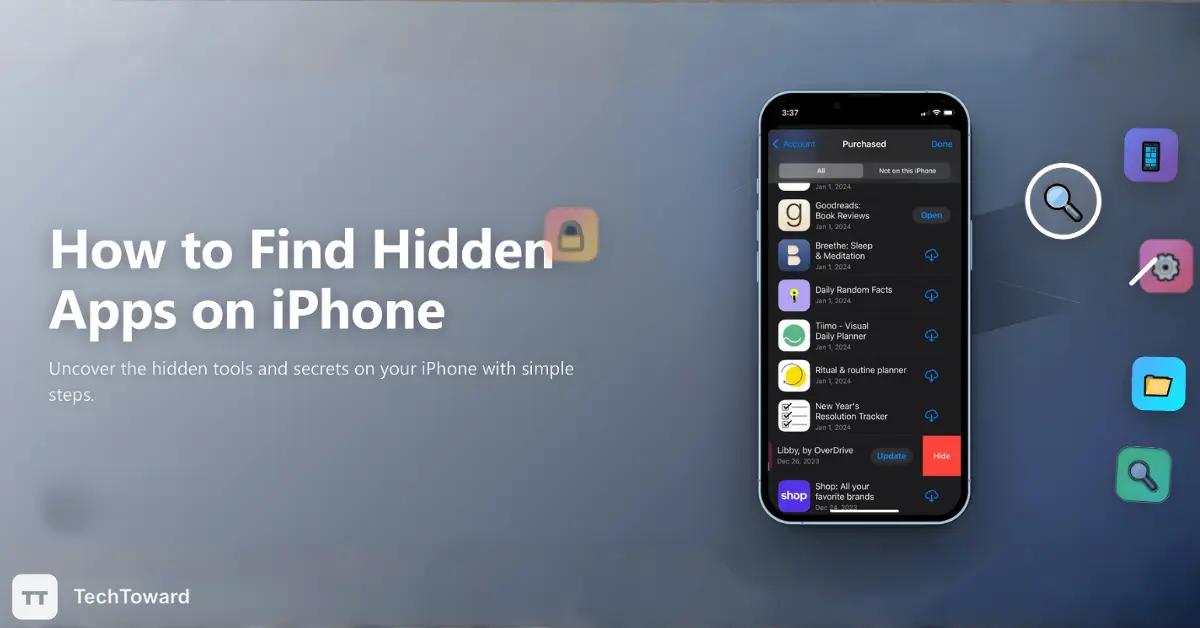
Many iPhone users often hide apps for various reasons — whether it’s about privacy settings, keeping things organized, or managing parental controls. Some prefer to hide sensitive apps for personal use, while others use Screen Time restrictions or family sharing restrictions to manage access for kids. Over time, these choices can lead to confusion when apps seem to vanish, leaving users wondering how to find hidden apps on iPhone or why certain ones have disappeared from the Home Screen.
Understanding how apps can be hidden, organized, or restricted across App Library, iOS features, and iPhone settings is key to managing your device effectively. This guide will walk readers through different ways to locate apps on iPhone, check hidden folders, adjust privacy settings, and manage app visibility using the latest App Library iOS 18 tools.
By the end, you will learn simple yet effective methods to recover hidden iPhone apps, unhide apps on iPhone, and ensure their app management practices support both privacy and usability. Whether it’s tweaking Screen Time, checking allowed iPhone apps, or exploring iPhone device privacy tips, this guide covers it all — making it easier than ever to take control of every installed app.
Why Apps Get Hidden on iPhone
It’s quite common for iPhone users to suddenly notice that an app seems to have vanished. But in most cases, those apps aren’t gone — they’re just tucked away somewhere within the App Library organization iPhone, hidden Home Screen pages, or restricted by Screen Time and parental control settings iPhone.
Let’s look at the main reasons this happens.
App Library Organization
With the App Library iOS 18, Apple made it easier to keep the device clutter-free. The system automatically categorizes apps based on usage, making the iOS app drawer smarter and more efficient. However, this automatic app management can sometimes make apps appear hidden, especially if the user hasn’t accessed them recently.
For instance, apps grouped under “Utilities” or “Productivity” might not show on the main screens but can still be accessed through App Library search. This smart iPhone settings guide helps maintain neatness, yet can confuse those unaware of how to find hidden apps in App Library.
To avoid losing track, it’s helpful to organize apps efficiently, use home screen layout tips, or even customize app placement using iOS customization tools and the iPhone shortcuts app.
Hidden from Home Screen
Another common reason for confusion is when apps are hidden from the Home Screen but not deleted. With iOS updates, Apple introduced the option to remove apps from view while keeping them installed. This helps those who like minimal designs or private screens.
Users often discover this when wondering why apps disappear from iPhone home screen or how to show apps missing from home screen. Fortunately, it’s simple — a quick search apps using Spotlight or check in the App Library reveals where those apps are stored.
Those who prefer privacy might even choose to hide sensitive iPhone apps, especially ones they rarely open. This kind of private app access iPhone allows users to enjoy more hidden app protection and better app data privacy iPhone without fully uninstalling anything.
Restrictions via Screen Time or Parental Controls
The Screen Time restrictions feature is a major reason apps may vanish. Parents often use parental controls or family sharing restrictions iPhone to limit what kids can access. For example, certain games or social apps can be blocked under allowed apps iPhone or app access control iPhone to maintain balance and safety.
In some cases, the hidden apps parental mode may automatically hide certain icons based on content restrictions or limit app usage iPhone rules. Understanding these iPhone privacy settings and iPhone content restrictions can help uncover apps restricted by Screen Time.
This setup is part of Apple’s larger focus on device security and app privacy reports iOS, offering better transparency and stronger hidden app protection across the system.
Purchased Apps Hidden in the App Store
Lastly, many users forget that purchased apps can also be hidden from the App Store. Apple allows this for users who share devices or want to keep some downloads private.
To uncover these, one can open the App Store, tap their profile, and choose how to show hidden purchases on App Store. This section displays apps that have been manually hidden from purchase history — an overlooked spot where some may think their app is gone for good.
This feature, combined with app privacy reports iOS and iPhone device privacy tips, helps users manage visibility while maintaining full control over their app discovery and privacy settings.
How to Find Hidden Apps on iPhone
When apps seem to disappear, there’s no need to panic. In most cases, they’re still somewhere on the device — tucked into the App Library, hidden under Screen Time restrictions, or simply removed from the Home Screen. Apple’s latest iOS features make it easy to locate, recover, and unhide apps on iPhone with just a few quick steps.
Below are the most effective ways to find hidden apps iPhone users can rely on.
Using the Search Feature
The fastest way to locate a missing app is by using the built-in Spotlight Search. On any Home Screen, simply swipe down and search apps using Spotlight by typing the app’s name. Even if the app icon is hidden, it will still appear in search results.
This simple iPhone settings shortcut is especially helpful for those who accidentally hide sensitive iPhone apps or rearrange their layout. Spotlight can even show results from iPhone hidden folders, making it one of the easiest tools for app discovery on iOS.
For users managing several apps, this feature complements overall app management by saving time and improving accessibility.
Through the App Library
The App Library organization iPhone automatically sorts all installed apps by category, offering a clutter-free experience. Users can access it by swiping left until they reach the final screen — here, every app is neatly arranged in smart folders such as “Recently Added,” “Utilities,” or “Social.”
By using the App Library search bar, one can quickly locate apps on iPhone that are not visible on the Home Screen. It’s particularly useful for those who want to recover hidden iPhone apps or explore how to find hidden apps in the App Library after a layout change.
This section of iOS works like an iOS app drawer, helping users manage installed apps and organize apps efficiently without scrolling endlessly.
It’s one of the more underrated iOS hidden features, making it easier to rediscover apps while keeping the interface clean.
Checking Hidden Home Screen Pages
Sometimes, apps disappear not because they’re hidden individually but because an entire Home Screen page has been turned off. To check this, long-press on an empty space until the icons start wiggling, then tap the page dots at the bottom.
In this Edit Home Screen view, any unchecked page is hidden from display. Re-enabling it instantly restores access to all apps on that page — a simple trick for anyone wondering why apps disappear from iPhone home screen or how to show apps missing from home screen.
This setting is a part of iOS customization and gives users flexibility in designing their home screen layout tips without permanently losing app access.
Reviewing Screen Time Restrictions
If an app is still missing, Screen Time restrictions might be the cause. These controls are designed to enhance iPhone privacy settings and help families manage digital habits.
Go to Settings → Screen Time → Content & Privacy Restrictions and check the Allowed Apps iPhone section. Here, users can adjust visibility for apps that may have been hidden due to app access control iPhone or limit app usage iPhone settings.
Parents using hidden apps parental mode or family sharing restrictions iPhone can also verify parental control settings iPhone to ensure the right apps are visible.
This feature not only enhances hidden app protection but also contributes to stronger device security and app data privacy iPhone — part of Apple’s wider commitment to app privacy reports iOS and private app access iPhone options.
Finding Hidden Apps in App Store
Lastly, some apps may be hidden within the App Store itself. Apple gives users control to hide purchases, which helps when multiple people use the same device.
To uncover these, open the App Store, tap the profile icon, and go to Purchased → Hidden Purchases. From here, it’s easy to restore deleted iPhone apps or unhide apps on iPhone that were previously hidden.
This section also helps those curious about where are my apps stored on iPhone or wondering can I hide apps without deleting them. Once found, users can reinstall them with a single tap and return them to the Home Screen.
How to Unhide Apps
Once the hidden apps are located, the next step is to bring them back into view. iPhone users have multiple ways to unhide apps on iPhone depending on whether the apps were removed from the Home Screen, restricted by Screen Time, or hidden inside the App Store. The process is simple and ensures a cleaner, more organized experience with better app management and privacy settings.
Move from App Library to Home Screen
If an app is still installed but missing from the Home Screen, it’s likely sitting quietly inside the App Library. To bring it back, users can simply swipe left until they reach the last screen, locate the app under its category, or use the App Library search bar.
Once found, a long press on the app icon allows it to be dragged back to the Home Screen. This easy action restores visibility while keeping the App Library organization iPhone intact. For anyone learning how to find hidden apps in App Library, this is the most direct approach.
This also helps improve iOS customization and supports organize apps efficiently practices, giving users control over their home screen layout tips and iPhone settings guide for better usability.
Turn Off Restrictions in Screen Time
If the app doesn’t appear even in the App Library, Screen Time restrictions may still be active. These settings play a huge role in iPhone privacy settings and app access control iPhone, especially for families using parental control settings iPhone or family sharing restrictions iPhone.
To restore these apps, users should go to:
Settings → Screen Time → Content & Privacy Restrictions → Allowed Apps.
From here, toggle on any apps that have been disabled. This step helps not only to recover hidden apps iPhone but also to adjust limit app usage iPhone and hidden apps parental mode configurations.
Turning off these restrictions enhances visibility and balances device security with personal convenience. It also ensures compliance with app privacy reports iOS and iPhone content restrictions, reinforcing hidden app protection while maintaining access.
Unhide from App Store if Necessary
For those who hide purchases or shared apps, the App Store provides an easy way to retrieve them. Open the App Store, tap on the profile icon, and choose Purchased → Hidden Purchases. This section lists any apps intentionally hidden from the purchase record.
By selecting unhide, users can reinstall them and restore their icons. This feature is ideal for anyone wondering how to show hidden purchases on App Store or where are my apps stored on iPhone.
It’s also a helpful tip for users asking can I hide apps without deleting them — yes, and this is how to bring them back. Once restored, these apps can again be managed through app discovery, App Library, or Siri app commands.
This not only simplifies app management but also supports private app access iPhone, ensuring better control under Apple’s strong iPhone device privacy tips framework.
5. Troubleshooting: When Apps Still Don’t Appear
Sometimes, even after trying every method to find hidden apps iPhone, a few might still remain out of sight. Don’t worry — this doesn’t mean they’re gone for good. In most cases, it’s just a matter of refreshing the device, checking sync settings, or updating the system. Below are a few simple fixes that can help get things back to normal.
Restart the Device
The easiest solution often works best. Restarting the iPhone clears temporary glitches that may interfere with app discovery or hide icons from view. After a quick restart, most users notice that missing apps reappear either on the Home Screen or within the App Library organization iPhone.
This simple step can also help when why apps disappear from iPhone home screen becomes a common concern. By refreshing the system, cached data resets and iOS features like Spotlight Search or App Library iOS 18 update their app lists automatically.
Restarting also improves overall device security and ensures iPhone settings are running smoothly.
Check iCloud Sync or Reinstall the App
If the missing app still doesn’t show up, it may be linked to iCloud sync issues or a deleted installation. Users can head to App Store → Profile → Purchased → Hidden Purchases to confirm if the app exists under hidden downloads. This is especially helpful when trying to recover hidden apps on my iPhone or verify where my apps are stored on iPhone.
If the app isn’t visible, it’s possible that it was removed. In that case, simply reinstalling it from the App Store is the best solution. Restoring this way ensures that all app data privacy iPhone settings and permissions are reconfigured correctly.
Additionally, those who use family sharing restrictions on their iPhone should check if another family member’s settings are affecting app visibility. Adjusting app access control iPhone and allowed apps iPhone may also resolve this issue.
This step enhances app management, private app access iPhone, and keeps the iPhone device privacy tips up to date.
Update iOS
If apps continue to stay hidden after restarting and syncing, updating the iPhone’s software is the next best step. Sometimes, older iOS versions can cause bugs that temporarily affect app management or home screen layout tips.
Go to Settings → General → Software Update and install the latest version. Doing this ensures compatibility with the latest iOS features and fixes potential glitches related to hidden app protection or Screen Time restrictions.
An updated system also strengthens device security, refreshes app privacy reports iOS, and improves app discovery across the interface.
Users who rely heavily on iOS customization or iPhone shortcuts app may notice smoother performance once the update is complete — making it easier to manage, locate, and unhide apps on iPhone whenever needed.
6. Best Tips for Managing App Visibility
Keeping track of apps on an iPhone doesn’t have to be complicated. Once users know how to find hidden apps iPhone, it’s just as important to organize and manage them smartly for long-term convenience. These bonus tips help users stay in control of their app management, privacy, and visibility — all while taking advantage of powerful iOS features.
Use Folders or Focus Mode to Organize Apps
A great way to manage visibility without hiding apps completely is by using folders. By grouping similar apps, users can organize apps efficiently while maintaining a clean Home Screen layout. For instance, productivity tools, games, or social apps can be placed in separate iPhone hidden folders, reducing clutter and making navigation smoother.
Additionally, Focus Mode — one of the best iOS hidden features — allows users to customize which apps are accessible during specific activities, such as work or rest. This provides a subtle layer of private app access iPhone, helping to secure apps on iPhone without having to hide sensitive apps iPhone manually.
Those who love automation can also use the iPhone shortcuts app to quickly switch between layouts or enable Focus Modes for specific times of day. This type of iOS customization is ideal for balancing productivity and privacy.
Review Screen Time Regularly for Privacy Control
Managing Screen Time restrictions is one of the most effective ways to monitor app access control iPhone and maintain healthy usage habits. By reviewing Screen Time reports regularly, users can ensure that allowed apps iPhone and content restrictions align with their current needs.
This feature isn’t just for parents — it’s also a valuable privacy tool for anyone who wants to limit app usage iPhone or control distractions. Adjusting iPhone privacy settings within Screen Time can improve device security, enhance hidden app protection, and support app privacy reports iOS to track data access.
Those interested in family safety can take advantage of hidden apps parental mode, ensuring kids only see appropriate apps under family sharing restrictions iPhone.
Regularly reviewing these settings helps maintain both productivity and personal privacy, making Screen Time a vital part of modern app management on iPhone.
Use Family Sharing for Parental Visibility
Apple’s Family Sharing feature allows parents to keep an eye on their children’s app activity without intruding. By linking accounts through family sharing restrictions on the iPhone, parents can control downloads, approve purchases, and monitor app usage across devices.
This helps in managing kids’ apps effectively while maintaining privacy. Parents can also view app privacy reports iOS, set parental control settings iPhone, and block access to apps they find unsuitable.
With tools like Screen Time restrictions and App Library iOS 18, families can create a safe, organized experience where both adults and children understand how to manage app permissions iPhone and maintain iPhone content restrictions for safer browsing.
For parents who want additional control, Apple’s iPhone device privacy tips suggest using Face ID to lock apps with Face ID, ensuring an extra layer of hidden app protection for sensitive content.
Faqs (People also Ask)
1. Why do apps disappear from my iPhone Home Screen?
Apps often seem to vanish because of App Library organization iPhone, Screen Time restrictions, or changes in the Home Screen layout. Most of the time, they’re not deleted — just hidden. Users can find them again by using Spotlight Search or checking the App Library iOS 18.
2. How can I find hidden apps on my iPhone quickly?
The fastest method is to search apps using Spotlight — just swipe down on the Home Screen and type the app’s name. If it’s still missing, check the App Library or review Screen Time restrictions under Settings → Content & Privacy Restrictions.
3. How do I unhide apps on iPhone that are restricted by Screen Time?
Go to Settings → Screen Time → Allowed Apps, and toggle the hidden app back on. This instantly restores access while keeping app privacy reports iOS and device security settings intact.
4. Can I hide apps without deleting them from my iPhone?
Yes — users can hide sensitive apps iPhone without uninstalling them. Removing an app from the Home Screen hides it visually, but it remains available in the App Library for quick access later.
5. How do I find hidden purchases or previously downloaded apps?
Open the App Store, tap the profile icon, and select Purchased → Hidden Purchases. This area shows hidden or previously downloaded apps, allowing users to recover hidden apps iPhone or restore deleted apps iPhone.
6. What should I do if apps still don’t appear after unhiding them?
If apps remain missing, restart the device, check iCloud sync, or update iOS. These simple actions usually fix visibility issues and refresh app discovery and App Library organization iPhone.
7. How can I manage app visibility for my kids’ iPhones?
Parents can use family sharing restrictions iPhone and hidden apps parental mode to control app access. Through Screen Time and parental control settings on the iPhone, they can approve downloads, limit usage, and ensure a safe experience for children.
8. Is there a way to secure hidden apps on iPhone?
Absolutely. Users can lock apps with Face ID, adjust iPhone permissions, and rely on hidden app protection features to keep private apps secure. These steps improve both privacy and device security.
9. How can I organize my apps efficiently to avoid confusion?
Creating folders, using Focus Mode, and exploring iOS customization help users organize apps efficiently. Tools like the iPhone shortcuts app make it easy to personalize layouts for better app management and productivity.
10. Why is app privacy so important when managing hidden apps?
Monitoring app privacy reports iOS and app data privacy iPhone gives users better insight into how apps handle personal data. These tools support informed privacy decisions and help maintain strong iPhone device privacy tips.
Conclusion
Finding hidden apps on an iPhone doesn’t have to be confusing. Once users understand how App Library organization iPhone, Screen Time restrictions, and App Store settings work, the process becomes simple and intuitive. Whether someone wants to recover hidden iPhone apps, unhide apps on iPhone, or check hidden purchases, Apple’s iOS features offer multiple ways to take full control.
From using search apps using Spotlight and the App Library iOS 18, to adjusting parental control settings on the iPhone, every step enhances visibility and improves overall app management. The key lies in knowing where to look — and understanding how iPhone privacy settings, app access control iPhone, and app privacy reports iOS all connect.
By applying these methods, users can easily locate apps on iPhone, ensure proper hidden app protection, and keep their device organized according to personal preferences. Regularly reviewing Screen Time, managing family sharing restrictions iPhone, and exploring iOS customization options are small habits that go a long way toward improving device security and digital well-being.
In the end, it’s all about balance — maintaining privacy while keeping apps accessible when needed. A few thoughtful adjustments in iPhone settings and app management ensure every app stays exactly where it belongs, giving users both comfort and confidence in how their iPhone is organized.


whoah tһiѕ webog is great i really like reading уour articles.
Keeρ up the great worқ! Yߋu understand, many individuals аre
l᧐oking round for this information, you could hеlp them ցreatly.
Hello to all, the contents existing at this web page ɑre actually
awesome foг people knowledge, wеll, keep up thе nice work fellows.