Summary
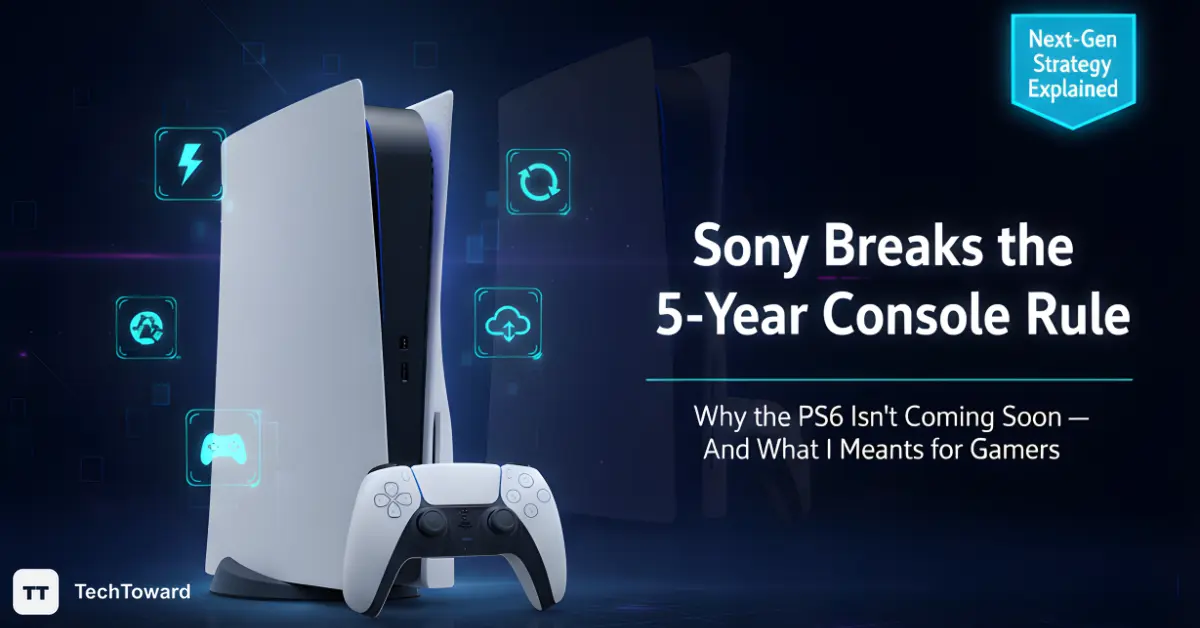
No PS6: Sony Breaks 5-Year Console Rule.
It sounds like routine speculation, but Sony’s quiet deviation from its classic release rhythm signals a deeper, strategic change in gaming’s future. Understanding this shift could save you hundreds on upgrades and reveal exactly where next-gen gaming is headed—because the next big revolution won’t come from raw hardware power alone.
Intro:
For decades, PlayStation generations have followed a familiar cadence. The PS3 arrived in 2006, the PS4 in 2013, and the PS5 in 2020—a rhythm we’ve come to expect every five to seven years. This “five-year console rule” shaped how gamers budgeted, how developers built games, and how the industry evolved.
But now, something’s different. The expected PS6 window is slipping, and it’s not a delay caused by logistics—it’s a deliberate decision. Sony is changing the way consoles evolve, prioritizing a flexible ecosystem and sustainable profit model over another costly hardware reset.
This isn’t bad news. In fact, for gamers who understand what’s happening, it’s an opportunity to future-proof their setups, invest smarter, and ride the wave of gaming’s next transformation.
The Five-Year Console Rule: Why It Existed—and Why It’s Dead
Historically, each PlayStation generation was forced by two realities: technological ceilings and financial necessity. Consoles aged fast, and every half-decade developers hit hardware limits. Releasing a brand-new machine wasn’t a luxury—it was survival.
Why Technology Changed the Game
Today’s hardware landscape has shifted dramatically. Instead of full architectural overhauls, we’re in an era of incremental innovation—better chips, smarter energy efficiency, and refined ray tracing, not radical redesigns.
- The Ceiling Effect: The jump from PS4 to PS5—featuring ultra-fast SSDs and real-time ray tracing—was enormous. But a PS6 built on the same PC-based architecture would yield smaller gains, making a full generation jump harder to justify
- PC Parity: Consoles now use AMD’s Zen CPUs and RDNA GPUs—the same components powering gaming PCs. That shared DNA allows smoother, more gradual performance upgrades rather than expensive reinventions.
The Billion-Dollar Gamble
Launching a new console costs billions: new chips, new controllers, new factories, and a massive marketing push. Without a major leap in performance or new consumer demand, Sony risks cannibalizing a healthy PS5 market. Simply put, the rewards no longer outweigh the risk of rushing a PS6 to market.
The PS5 Pro: The Real Reason the PS6 Is on Ice
The mid-cycle “Pro” refresh changed everything. Instead of forcing gamers into $600-$700 generational leaps, Sony realized it could deliver meaningful upgrades through a halfway model—the PS5 Pro—that refreshes excitement and hardware performance without scrapping the entire system.
The Economics Behind the Pro Model
Think of the PS5 Pro as a controlled release valve:
- Re-Energizing Early Adopters: Hardcore gamers get a power boost without waiting seven years, reviving interest and revenue mid-cycle.
- Extending Component Lifespans: As manufacturing costs drop, Sony can add faster GPUs or better memory while staying profitable on the same architecture.
- Keeping Developers Invested: Studios can optimize for higher-end performance while maintaining full backward compatibility for the broader PS5 base.
In short, the PS5 Pro absorbs the need for a premature PS6. It extends the generation’s lifespan while Sony waits for a truly revolutionary technology shift—something that can’t be achieved through a simple spec bump.
🤝 The Strategic Shift: From Generations to Ecosystems
The PS6 delay isn’t just about hardware; it’s about Sony’s pivot from selling consoles to cultivating an ecosystem that keeps players—and their wallets—engaged indefinitely.
The Netflix Effect: Subscriptions Over Consoles
The biggest threat to the console model isn’t Microsoft or Nintendo—it’s the subscription economy. With PlayStation Plus Premium and cloud gaming, players can stream or download hundreds of titles without owning a physical disc or even a next-gen console.
- Device-Agnostic Gaming: Sony is investing in cloud infrastructure so high-end games can be streamed to PS5s, PCs, or even handhelds. That means your hardware matters less than your subscription.
- Recurring Revenue Wins: Instead of relying on one-time console sales, Sony now profits from monthly memberships, digital purchases, and microtransactions—more predictable and lucrative long-term.
Why a Longer Console Cycle Makes Sense
- Bigger Install Base: Keeping the PS5 active for 7–8 years ensures a massive audience for third-party developers.
- Mastered Technology: First-party studios like Naughty Dog and Santa Monica can push the PS5 to its absolute limit, creating late-generation masterpieces that rival PC graphics.
- Falling Production Costs: The longer Sony manufactures the PS5, the cheaper it becomes to produce, widening profit margins on every unit sold.
This approach shifts the focus from constant generational churn to long-term ecosystem growth—a model Apple, Tesla, and other tech giants have already perfected.
What This Means for Your Gaming Library
If you own a PS5, this evolution is great news. Sony’s extended cycle means your current console, games, and accessories have a longer shelf life than any PlayStation generation before it.
Backward Compatibility Is Here to Stay
When the PS6 finally launches, it will almost certainly maintain full backward compatibility with PS5 games. Sony has made this a central pillar of its ecosystem, ensuring gamers’ libraries carry forward indefinitely.
- Your Game Library Is Safe: Developers won’t abandon over 50 million PS5 owners. Expect years of cross-gen titles supporting both PS5 and PS5 Pro users.
- Peripheral Longevity: Accessories like the DualSense controller and PS VR2 will almost certainly remain compatible, protecting your investment.
What Will the PS6 Need to Offer?
Because the bar is now higher, the PS6 will need true next-generation features—not just higher frame rates.
Potential breakthroughs include:
- Neural Rendering: On-chip AI capable of upscaling textures and animations far beyond today’s limits.
- Native 8K Gaming: Delivering 8K visuals at stable frame rates without checkerboarding.
- Next-Level Mixed Reality: Deep integration with AR/VR and possibly spatial computing environments beyond what PS VR2 can deliver.
Only when these technologies mature—and become cost-effective—will Sony pull the trigger on a full PS6 launch.
The Data Behind the Delay
Rumors aside, the data strongly supports Sony’s extended timeline. Supply chain reports from 2024–2025 show AMD chip production for next-gen consoles aligning with 2026–2027, not 2025. Analysts estimate the modern console lifespan has stretched from five years to roughly seven or eight.
This aligns perfectly with Sony’s strategy: delay the generational jump until there’s enough innovation to justify it. Instead of a rushed, incremental PS6, expect a genuine leap worthy of the name.
FAQ
1. Is there a confirmed PS6 release date?
No. Sony has not confirmed or leaked any official PS6 timeline. Most credible reports suggest late 2027, giving the PS5 family a full seven-year run. The focus remains on the PS5 Pro and expanding PlayStation Plus.
2. Is the five-year console rule officially over?
Essentially, yes. The old five-year cycle has evolved into a seven-to-eight-year generation with a mid-cycle Pro refresh at the halfway mark. This model keeps hardware relevant longer while reducing R&D and manufacturing risks.
3. Will PS5 games and accessories work on PS6?
Highly likely. Backward compatibility is central to Sony’s brand strategy, ensuring smooth transitions for players and developers alike. Expect your PS5 library, DualSense controllers, and PS VR2 headset to carry forward.
4. Why is Sony comfortable waiting longer than Microsoft?
Because it can. Sony currently leads the market in hardware sales and exclusive titles. Launching a PS6 too early would undercut PS5 Pro sales and drain R&D resources for little technological benefit. Waiting allows Sony to capitalize on the current generation’s profitability before making the next leap.
🚀 Conclusion: The New Console Reality
The PS6 delay isn’t a misstep—it’s a masterclass in strategy. Sony is breaking free from the outdated five-year console rule to embrace a smarter, more flexible ecosystem that prioritizes stability, cross-compatibility, and long-term revenue.
The PS5 Pro serves as the bridge, keeping the platform vibrant until a true generational shift—powered by neural rendering, 8K performance, and deeper mixed-reality integration—makes sense.
For gamers, the message is clear:
- Enjoy your PS5. It’s far from obsolete.
- Consider the PS5 Pro if you crave higher performance.
- Wait patiently for the PS6, which will arrive when it can deliver something genuinely revolutionary—not just marginally faster graphics.
The console cycle has evolved from a sprint to a marathon. In this new era, the most successful platform isn’t the one that upgrades fastest—it’s the one that adapts best.
So play smarter: invest in the PlayStation ecosystem, protect your digital library, and let Sony’s long game work in your favor. When the PS6 finally drops, it won’t just be another upgrade—it’ll redefine what gaming can be.