Summary
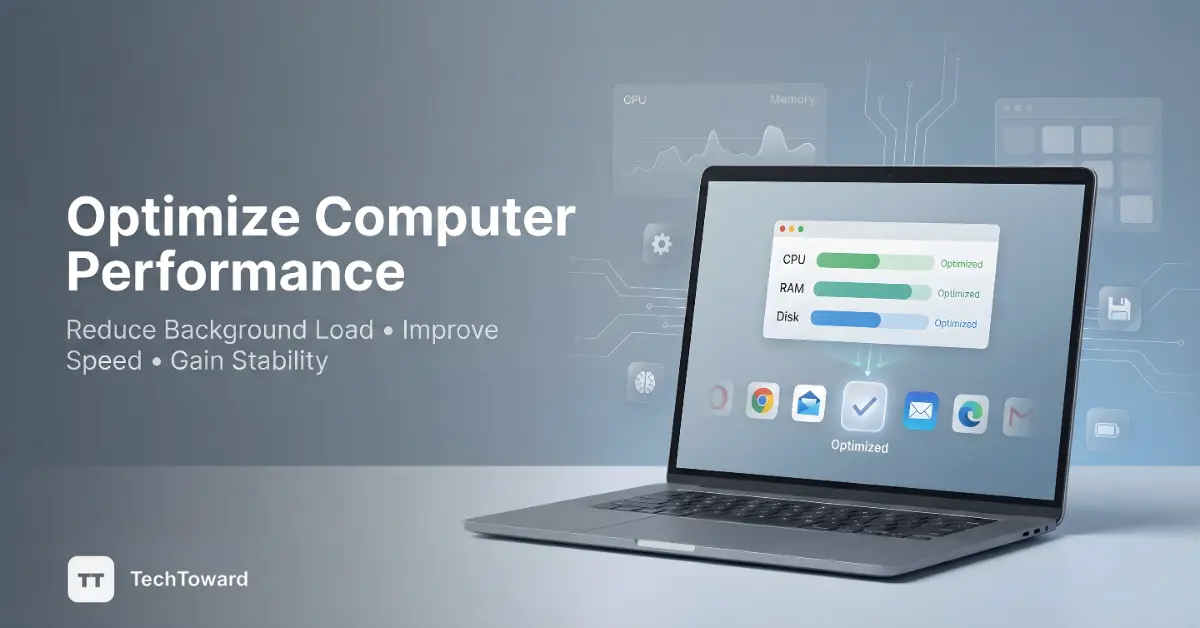
To optimize computer performance, users need to reduce background load, align system settings with real usage, and fix the few bottlenecks that actually slow a device down.
Most performance issues come from misconfigured defaults, not failing hardware.
The steps below focus on what delivers noticeable speed, stability, and battery gains without installing extra software.
Why This Matters
Slow speed, short battery life, and random lag are common complaints among students, remote workers, and freelancers. The usual advice is vague: “clean your PC,” “close apps,” or “buy a new device.” That advice often fails because it treats symptoms, not causes.
Modern operating systems already include the tools needed to optimize computer performance. The problem is knowing which settings matter and which ones do nothing. This guide explains exactly what works, what doesn’t, and how to choose correctly.
Identify What’s Actually Slowing Computer Performance
Before changing anything, it helps to understand where performance is being lost.
In real-world use, most slowdowns come from three sources:
- Too many background processes competing for CPU and memory
- Power settings that prioritize battery or noise over speed
- Storage that is nearly full or poorly managed
A common mistake is assuming the computer is “old” when the issue is configuration-based. A five-year-old laptop can still feel fast if the system load is controlled.
Recommendation: Check built-in task or activity monitors first. If CPU or memory usage stays high while doing simple tasks, optimization will help.
Reduce Background Load Without Breaking the System
Many computers feel slow because they are doing too much when the user is doing very little.
Startup apps are the biggest culprit. Most users never review them.
In real-world use, disabling unnecessary startup items often improves boot time and overall responsiveness immediately.
What to change
- Disable apps that auto-launch but are rarely used
- Keep security and system services enabled
- Avoid disabling drivers or anything labeled “system”
Limitation: This will not fix performance issues caused by weak hardware. It removes waste, not adds power.
Adjust Power Settings for Real Workloads
Power profiles directly affect computer performance, especially on laptops.
Most systems default to balanced or battery-saving modes. These reduce CPU speed aggressively.
Most users notice smoother multitasking after switching to a performance-focused profile when plugged in.
Clear recommendation
- Use performance or high-performance mode when working
- Switch back to balanced when on battery if needed
Who this is for: Remote workers and students who dock or charge while working
Who should avoid it: Users prioritizing silent operation over speed
Storage Space Has a Bigger Impact Than Expected
Low disk space slows systems in subtle but persistent ways.
Operating systems rely on free storage for updates, caching, and virtual memory. When space drops too low, performance degrades.
In real-world use, keeping at least 20 percent free storage prevents many unexplained slowdowns.
What works
- Remove large unused files
- Clear built-in temporary storage tools
- Archive rarely used media externally
What doesn’t
- Repeated “cleaner” routines that remove a few megabytes
- Deleting system files without understanding their role
Optimize Computer Speed Through Visual and UI Settings
Visual effects improve appearance but consume system resources.
On lower-end or older devices, these effects can impact responsiveness.
Most users notice faster window movement and app switching after reducing animations.
Practical adjustment
- Reduce transparency and motion effects
- Keep readability features enabled
Decision filter:
This helps devices with limited RAM or integrated graphics. High-end systems will see minimal benefit.
When Software Updates Improve Performance — and When They Don’t
Updates are often blamed for slowdowns, but the reality is mixed.
Security and system updates often include performance fixes. Feature updates can temporarily increase background activity.
A common mistake is delaying updates indefinitely.
Balanced approach
- Install system updates regularly
- Restart after major updates
- Avoid updating during critical work sessions
In real-world use, systems left un-updated for long periods tend to feel less stable over time.
Optimize Computer Gaming Performance Without Extra Tools
Gaming performance depends on consistency, not just raw power.
Background apps, overlays, and power limits matter more than most settings tweaks.
What actually helps
- Close non-essential apps before launching games
- Use full-screen exclusive mode when available
- Ensure the system is in performance power mode
What rarely helps
- Excessive in-game tweaks without understanding GPU limits
- Registry edits shared online
Warning: Pushing settings too far can increase heat and reduce battery life quickly on laptops.
When This Works and When It Doesn’t
These steps reliably improve computer performance when the system is slowed by configuration or background load.
They do not help when:
- The device has insufficient RAM for modern workloads
- Storage is physically failing
- Thermal throttling is caused by hardware damage
In those cases, optimization delays but does not eliminate the problem.
Common Mistakes That Cause Performance Loss
Most performance issues come from well-intended but harmful actions.
Frequent mistakes
- Disabling critical system services
- Installing multiple overlapping utilities
- Ignoring restarts for weeks
A common pattern is stacking “optimizations” without measuring results. Fewer, targeted changes work better.
Who Should Use These Methods — and Who Shouldn’t
Best fit
- Students using laptops daily
- Freelancers balancing performance and battery life
- Professionals who want stability without extra software
Not ideal
- Users expecting hardware-level speed gains
- Systems already maxed out under heavy workloads
Understanding this boundary prevents frustration.
FAQ:
How do I optimize my PC to run faster?
Close unused apps and restart your PC. Having many apps or browser tabs open can slow performance. Close any apps or tabs you don’t need. If performance does not improve, restart your PC.
Does optimizing computer performance increase battery life?
Yes, when background activity and power settings are aligned. Performance modes reduce battery life, but removing waste improves efficiency overall.
Will this fix a computer with slow speed permanently?
It fixes configuration-related slow speed, not hardware limitations. Results last if habits remain consistent.
Is it safe to disable startup programs?
Yes, if non-essential apps are targeted. Disabling system or security services is risky.
Do visual effects really affect performance?
On mid-range and older devices, yes. On high-end systems, the impact is minimal.
Should users reset their computer instead?
Only if performance issues persist after optimization. Resetting is a last-resort cleanup, not a first step.
Final Takeaway
Optimizing computer performance is less about aggressive tweaks and more about removing friction the system never needed. Small, informed adjustments deliver the biggest real-world gains.
With a clear understanding of how this works, readers can now choose the changes that actually fit their needs — without guesswork.