Summary
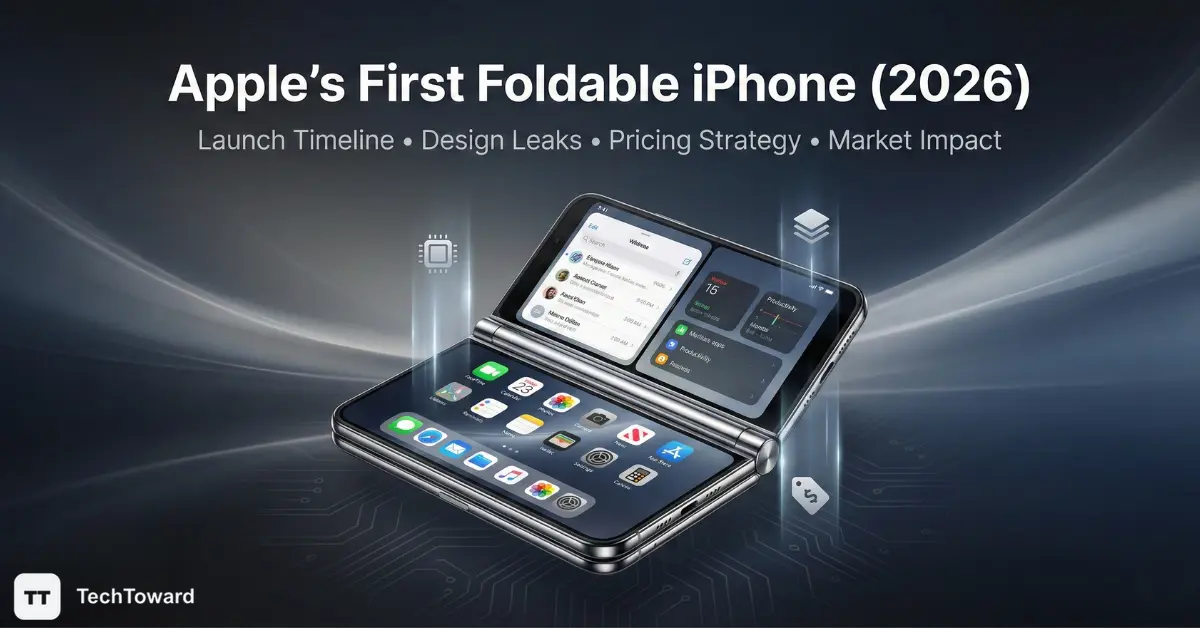
The Apple foldable iPhone is widely expected to debut in 2026, marking the company’s first entry into the foldable smartphone segment. While Apple has not officially confirmed a foldable iPhone release date, supply chain signals and industry reporting point to a late-2026 launch window. For consumers deciding whether to upgrade now or wait, the decision depends less on novelty and more on design maturity, pricing strategy, and how deeply the device integrates into the broader Apple ecosystem.
Why 2026 Matters More Than a Simple Product Launch
Foldable phones are no longer experimental. Devices from competitors have iterated through multiple generations, improving hinge durability, display creases, and software optimization. What makes Apple’s entry different is not the form factor itself, but the timing.
Apple historically avoids entering a category first. Instead, it waits until technology reaches a threshold of reliability, cost efficiency, and ecosystem readiness. The 2026 window suggests the company believes foldable hardware is finally stable enough to meet its internal quality standards.
Most coverage focuses on whether Apple can “catch up” in foldables. That framing misses the deeper question: can Apple redefine what a foldable phone is supposed to do?
The answer likely depends on three pillars:
- Hardware refinement and hinge engineering
- Advanced display durability
- Seamless integration with iOS, iPadOS-style multitasking, and Apple Silicon efficiency
If those align, this will not simply be another folding phone — it will be Apple’s interpretation of a hybrid iPhone–iPad experience.
The Expected Launch Timeline: Reading Between the Lines
Although Apple remains silent publicly, analysts tracking supply chain partners in Asia suggest that panel production for Apple foldable display technology could begin in 2025, pointing to a late-2026 commercial release.
Historically, Apple introduces major design shifts in the fall. If the company follows its traditional cadence, the most realistic foldable iPhone release date would align with a September event in 2026.
However, there is an overlooked nuance: foldables are harder to scale at launch. Unlike standard iPhone releases, which ship in tens of millions of units in the first quarter, a foldable model may debut in limited supply. Apple has done this before with category-adjacent devices, easing production constraints before scaling.
This has two implications:
- Early adopters may face constrained availability.
- Apple could position the foldable as a premium tier above the Pro Max line, rather than a direct replacement.
The timeline is therefore not just about “when,” but about how Apple intends to position it within its portfolio.
What the Design Leaks Suggest About Apple’s Strategy
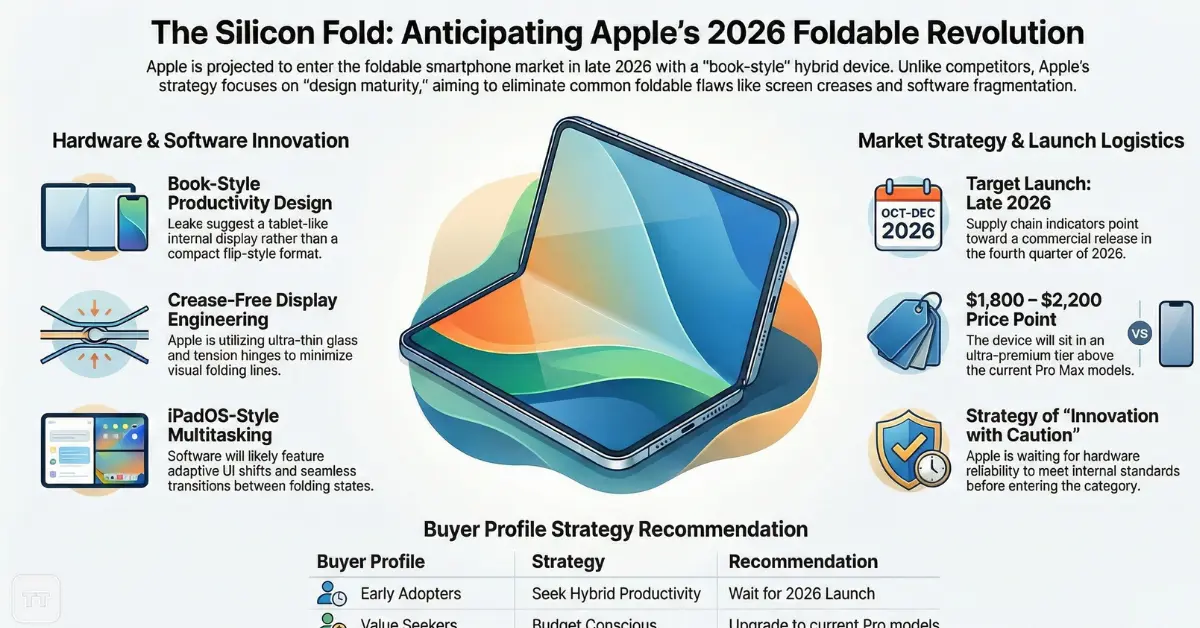
Recent iPhone Fold design leaks indicate Apple may opt for a book-style foldable rather than a clamshell format. That would place it closer to a mini-tablet experience when unfolded, rather than a compact flip phone.
If accurate, this signals something important: Apple may see the foldable not as a fashion-forward experiment, but as a productivity expansion of the iPhone.
A Larger Internal Display With Minimal Crease
One of the most discussed elements of Apple foldable display technology is crease reduction. Competing foldables still show visible hinge lines under certain lighting conditions. Apple is reportedly investing in hinge tension systems and ultra-thin glass layering to minimize visual distortion.
Reducing the crease is not cosmetic — it is functional. A visible distortion line disrupts media viewing, gaming, and stylus precision. Apple’s brand equity depends on eliminating such compromises.
A Reinforced Hinge System
Durability remains the biggest psychological barrier to foldables. Consumers worry about dust ingress, hinge wear, and long-term reliability.
If Apple’s hinge design proves more rigid and resistant to particulate damage, it could neutralize one of the main objections that has slowed mainstream adoption. The company is unlikely to launch without extended internal stress testing exceeding competitor benchmarks.
Thickness and Weight Tradeoffs
A realistic assessment must acknowledge physics. Foldables are thicker and heavier than slab phones. Even with Apple’s industrial design strengths, a foldable iPhone will likely exceed the thickness of current Pro models when closed.
The real question becomes whether the added screen real estate justifies the compromise.
For users who primarily consume media, multitask, or use split-screen apps, the answer may be yes. For minimalists who value pocket comfort, it may not.
Pricing Strategy: Premium or Ultra-Premium?
Apple foldable phone price rumors consistently place the device above the current Pro Max tier, potentially in the $1,800–$2,200 range in the United States.
That figure may sound extreme — but it aligns with competitor foldables and Apple’s historical premium segmentation.
This pricing approach accomplishes several strategic goals:
- It avoids cannibalizing the core iPhone lineup.
- It positions the foldable as an aspirational flagship.
- It protects margins while production volumes scale.
However, price alone will not determine success. Perceived value matters more than raw cost.
If the foldable replaces both an iPhone and a compact tablet for some users, the higher price becomes easier to rationalize. If it feels like a novelty upgrade, mainstream adoption will stall.
The early generation is therefore unlikely to be mass-market. It will target enthusiasts, productivity users, and loyal Apple ecosystem customers willing to experiment.
The Software Question: Where Apple Could Change the Game
Hardware headlines dominate early coverage, but the long-term impact depends on software.
Apple’s strength lies in optimization across hardware and operating systems. A foldable device could introduce:
- Enhanced multitasking closer to iPadOS
- Adaptive app resizing with seamless transitions
- Context-aware UI shifts when folding or unfolding
- Better cross-device continuity with Mac and iPad
The real differentiation may not be the fold — but what happens when it unfolds.
If Apple integrates productivity workflows, external display features, and Apple Pencil compatibility in a meaningful way, the device could blur the boundary between phone and tablet more effectively than competitors have managed.
This is where Apple historically outperforms: ecosystem coherence.
Market Impact: Disruption or Validation?
When Apple enters a category, it often validates it for the mainstream.
Foldables currently occupy a niche share of the global smartphone market. If Apple launches a polished and durable model, the category could see:
- Increased consumer trust
- Broader carrier promotion
- Accelerated third-party app optimization
However, it may also intensify competition. Rival manufacturers will likely respond with thinner models, lower prices, and more aggressive innovation cycles.
The bigger industry shift may not be immediate sales volume, but perception. A foldable backed by Apple’s marketing machine could normalize the form factor.
The Overlooked Limitation: Repairability and Longevity
One issue rarely discussed is repair complexity.
Foldable devices involve layered displays, flexible substrates, and intricate hinge assemblies. Repairs are typically expensive and delicate. If the inner display fails outside warranty, replacement costs may approach several hundred dollars.
Consumers considering long-term ownership should factor in:
- AppleCare pricing adjustments
- Potential battery replacement complexity
- Resale value volatility in early generations
First-generation devices often carry higher depreciation risk. Those planning multi-year ownership may prefer waiting until the second or third iteration, when engineering refinements reduce failure rates.
Should You Wait for Apple Foldable iPhone?
This is less about excitement and more about usage patterns.
Waiting may make sense if:
- The current device functions adequately.
- There is interest in larger-screen multitasking.
- Upgrades are typically spaced every 3–4 years.
Upgrading now may make more sense if:
- The existing phone is nearing end-of-life.
- Budget sensitivity makes ultra-premium pricing unrealistic.
- Foldable durability concerns outweigh curiosity.
An important perspective shift helps here: the foldable is unlikely to replace the standard iPhone immediately. It will complement the lineup.
Those who prefer stability over experimentation may benefit from observing the first generation before committing.
Early adopters often gain innovation but accept higher risk. Conservative buyers gain refinement but wait longer.
Competitive Landscape: Where Apple Will Face Pressure
By 2026, foldable competitors will likely be on their fifth or sixth generation. They will have:
- Reduced crease visibility
- Improved hinge lifespan
- Thinner chassis designs
- Better water resistance
Apple’s advantage lies in vertical integration — silicon design, operating system control, and hardware-software synergy.
Its disadvantage lies in late entry. Expectations will be exceptionally high. A merely “good” foldable will not suffice; it must feel distinctly Apple.
The company’s reputation for premium execution leaves little room for compromise.
A Shift in How Smartphones Are Used
If executed correctly, the Apple foldable iPhone could subtly change usage habits.
Instead of switching between phone and tablet, users may rely on one device for both communication and deeper engagement — document editing, content creation, long-form reading.
That behavioral shift is more meaningful than raw sales numbers. It redefines what a “phone” is expected to do.
However, if unfolding becomes occasional rather than habitual, the novelty may fade.
The long-term success of foldables depends on habit formation — not marketing.
Curious about the history of Apple’s foldable efforts? Check out our earlier deep dive: Is the Foldable iPhone Finally Coming? Whether the foldable iPhone is finally coming.
Frequently Asked Questions
When is the foldable iPhone release date expected?
Most industry analysts expect a late-2026 launch. While Apple has not confirmed timing, supply chain activity suggests production could align with a fall 2026 announcement.
How much will Apple’s foldable phone cost?
Early estimates place pricing between $1,800 and $2,200 in the U.S. Final pricing will depend on storage tiers and component costs, but it is expected to sit above current Pro Max models.
What do the latest iPhone Fold design leaks reveal?
Leaks suggest a book-style design with a larger inner display, reinforced hinge system, and a focus on minimizing the screen crease. The goal appears to be blending iPhone portability with iPad-like multitasking.
Is Apple developing new foldable display technology?
Yes. Reports indicate Apple is investing in advanced ultra-thin glass and OLED panel engineering to improve durability and reduce visible folding distortion.
Should you wait for Apple foldable iPhone or upgrade now?
Waiting makes sense for users seeking a hybrid phone-tablet experience and willing to pay premium pricing. Those needing immediate reliability or value may prefer upgrading to a current model and observing the first foldable generation from a distance.
Conclusion: Innovation With Caution
The Apple foldable iPhone represents more than a new form factor. It reflects Apple’s belief that flexible displays have matured enough to meet its standards.
The most important question is not whether it will launch — but whether it will meaningfully improve daily use. If it transforms multitasking, media consumption, and ecosystem continuity, it could redefine expectations for high-end smartphones.
If it feels like a thicker phone with a folding trick, adoption will remain limited.
For 2026 buyers, the decision ultimately comes down to patience, budget, and appetite for first-generation innovation. The foldable future appears closer than ever — but as with most major transitions, refinement will matter more than novelty.