Android vs iPhone—which one is better?
On the surface, it feels like a basic tech question. But once you dig in, you realize this choice affects how you communicate, work, relax, and even how frustrated (or comfortable) you feel every day. When you understand the real differences, choosing the right phone becomes much easier—and you might even save yourself money and regret.
Why Choosing a Phone Feels So Overwhelming
Have you ever walked into a phone store or opened an online comparison page, convinced you’d decide in five minutes… only to leave more confused than when you started?
You’re definitely not alone.
I’ve spent over 15 years around technology, and I still see people struggle with this choice. Friends often say, “Just tell me which one is better.” And I get it—everyone wants a clear winner.
But here’s the truth most articles don’t say out loud:
There is no single “best” phone. There’s only the phone that fits you best.
I once switched from an iPhone to an Android phone for six months. Then I switched back. That experience completely changed how I think about this debate—and it had nothing to do with brand loyalty or specs.
Here’s what we’ll figure out together:
- Why most Android vs iPhone comparisons miss the point
- Why your daily habits matter more than technical features
- How iOS versions and Android versions really differ (without the tech headache)
- Which phone actually fits your lifestyle, budget, and comfort level
Let’s talk about this like two real people having a helpful conversation—not a sales pitch.
The Real Difference Between Android and iPhone
Before getting into features, it helps to understand what makes these phones fundamentally different.
These Aren’t Just Phones—They’re Entire Systems
At a basic level:
- Android is made by Google and used by many brands like Samsung, Pixel, Motorola, and OnePlus.
- iPhone is made by Apple and runs on Apple’s own software, iOS.
That one difference explains almost everything people love—or get frustrated by.
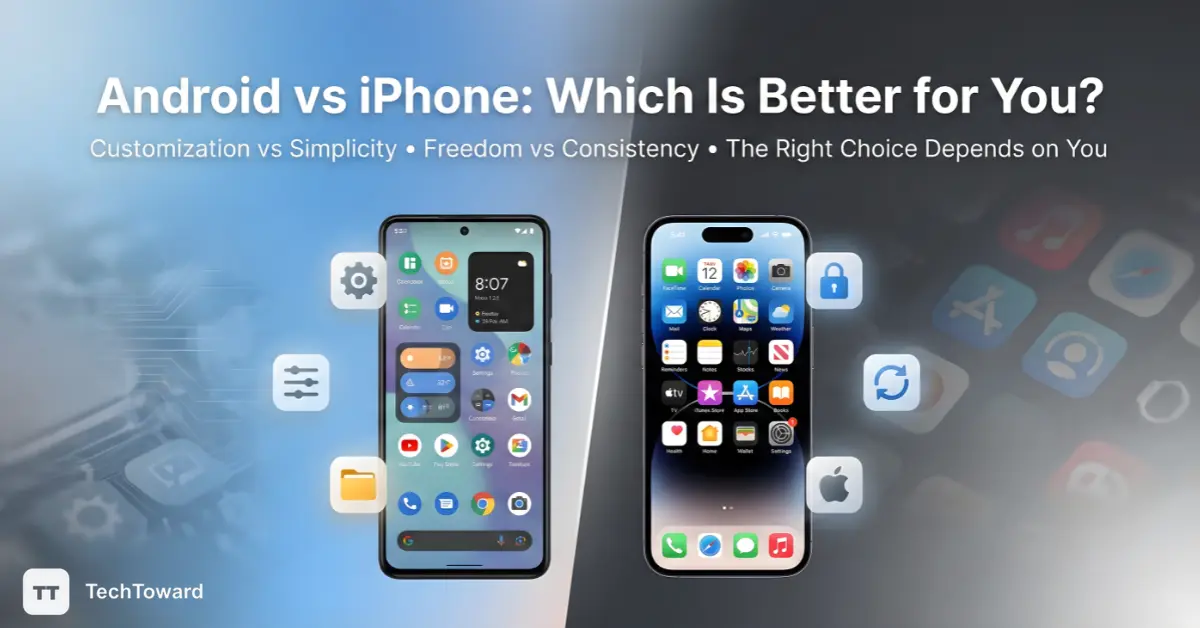
Android focuses on freedom and flexibility.
iPhone focuses on simplicity and consistency.
Neither approach is better. They’re just built for different types of people.
Why Android Feels So Powerful to Some People
Android Is All About Control
With Android, you can customize almost everything:
- Your home screen
- Your default apps
- Widgets
- How your phone looks and behaves
- How files are stored and shared
If you enjoy setting things up your way, Android feels incredibly satisfying.
I’ve seen people turn Android phones into full productivity tools—with calendars, email, task lists, and work apps all visible the moment the screen turns on.
Android Versions (Without the Tech Talk)
Every year, Google releases a new Android version. Phone brands then tweak it for their own devices.
What that means for you:
- More variety and innovation
- Some differences in update timing
- More settings and options
If you like experimenting and making your phone work exactly how you want, Android rewards that curiosity.
Why iPhone Feels Easier (and Less Stressful)
Apple Designs for Comfort, Not Complexity
Apple intentionally limits what you can change—and that’s not a flaw. For many people, it’s a relief.
With iPhones:
- Updates arrive at the same time for everyone
- Apps behave consistently
- Settings are organized the same way across devices
You don’t have to figure things out. The phone just works.
For busy professionals, parents, or anyone who doesn’t want to spend time tweaking settings, this simplicity is comforting.
Why iOS Updates Are a Big Deal
Apple controls both the phone and the software. That’s why new iOS versions work smoothly—even on older phones.
This usually means:
- 5–7 years of updates
- Strong security
- Reliable performance
It’s also why iPhones tend to keep their value longer.
Customization vs Consistency: The Real Trade-Off
Where Android Really Shines
- Tons of personalization options
- Many phone models at different prices
- More hardware variety
- Shared charging standards across brands
Where iPhone Clearly Wins
- Smooth integration with other Apple devices
- Predictable updates
- Apps that feel polished
- A clean, simple experience
Customization isn’t just about looks—it’s about control.
If control excites you, Android feels right.
If simplicity relaxes you, iPhone usually feels better.
Apps and Performance: What Actually Matters Day to Day
Do Apps Run Better on iPhone?
Short answer: often, yes—but not always.
Many developers release apps on iPhone first because:
- There are fewer phone models to support
- Optimization is easier
- iPhone users tend to spend more on apps
That said, modern Android phones—especially Pixel and Samsung models—are very close in performance.
For normal use like texting, email, social media, and streaming, you probably won’t notice a difference.
But for certain creative or professional apps, iPhone still has a small edge.
Battery Life: The Truth Most Comparisons Skip
Battery life depends more on how you use your phone than on Android or iPhone itself.
Things that matter most:
- Screen size
- Processor efficiency
- How many apps run in the background
That said:
- Android phones often have bigger batteries and much faster charging
- iPhones are very efficient and age well over time
Some Android phones can charge halfway in under 30 minutes—which can be a lifesaver if you’re always on the go.
Camera Quality: Specs Don’t Tell the Whole Story
This is where marketing can be misleading.
Android Cameras
- High megapixel numbers
- Manual controls
- Experimental zoom features
iPhone Cameras
- Natural-looking photos
- Excellent video
- Strong low-light performance
Most people don’t need the “best” camera—they need a reliable one.
If you shoot a lot of video or social media content, iPhone is hard to beat.
If you enjoy photography and tweaking settings, Android gives you more freedom.
Privacy and Security: What You Should Actually Care About
Why iPhone Feels Safer to Many Users
Apple puts a lot of emphasis on privacy:
- App tracking transparency
- Strong encryption
- Less reliance on ads
Android’s Side of the Story
Google does collect more data—but Android also gives you more control if you’re willing to dig into settings.
If you want privacy without effort, iPhone feels safer out of the box.
If you want transparency and control, Android gives you tools.
Cost: Upfront Price vs Long-Term Value
Android Gives You More Price Choices
- Budget phones under $200
- Mid-range phones with great value
- Premium phones that match iPhone prices
iPhone Costs More—but Holds Value
- Longer software support
- Strong resale value
- Easy access to repairs and accessories
If you upgrade often, Android can save money.
If you keep your phone for years, iPhone often balances out.
The Question Most People Forget to Ask
This is the part most reviews skip.
Ask yourself:
- Do I enjoy customizing things—or avoiding it?
- Do I want freedom—or simplicity?
- Do I already use other Apple products?
- Do I prefer stability—or flexibility?
When people answer honestly, the right choice becomes clear.
FAQs
Is Android better than iPhone?
Android is better for customization; iPhone is better for simplicity and long-term support.
Which phone is easier for older adults?
Surprisingly, iPhone often wins because of consistent design and accessibility features.
Which lasts longer?
iPhones usually get updates longer. Android longevity depends on the brand.
Is Android less secure?
No—but iPhone offers stronger privacy by default, while Android gives more control.
Which is better for work?
iPhone works well in corporate environments. Android is great for customized workflows.
Final Thoughts: Choose the Phone That Fits Your Life
Android vs iPhone isn’t about specs or online opinions.
It’s about how you live, work, and think.
When you choose a phone that matches your habits, you stop thinking about the device—and that’s when technology truly works for you.
Now that you understand how Android vs iPhone really differs, don’t overthink it.
Pick the phone that feels natural, supports your routine, and makes your life easier—not harder.
Sometimes the best choice isn’t the most powerful one—it’s the one that simply feels right.