Summary
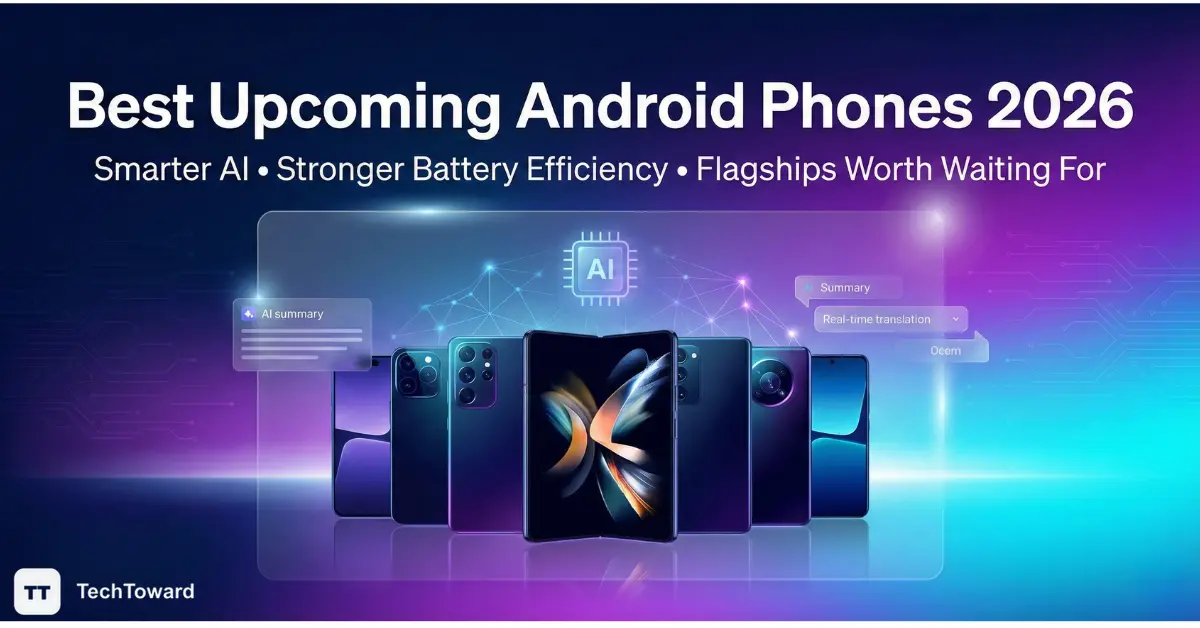
The best upcoming Android phones 2026 are shaping up to deliver smarter on-device AI, stronger battery efficiency, and more refined hardware rather than radical redesigns. Most major brands are focusing on practical performance gains, advanced camera processing, and longer software support. For buyers planning an upgrade, waiting for the right 2026 flagship could mean getting more longevity and smarter features—not just faster specs.
Why 2026 Feels Different From a Typical Upgrade Cycle
For several years, smartphone upgrades have followed a predictable pattern: better chip, brighter screen, slightly improved camera. In 2026, that pattern is shifting. The change is not necessarily visible in industrial design, but it is happening beneath the surface.
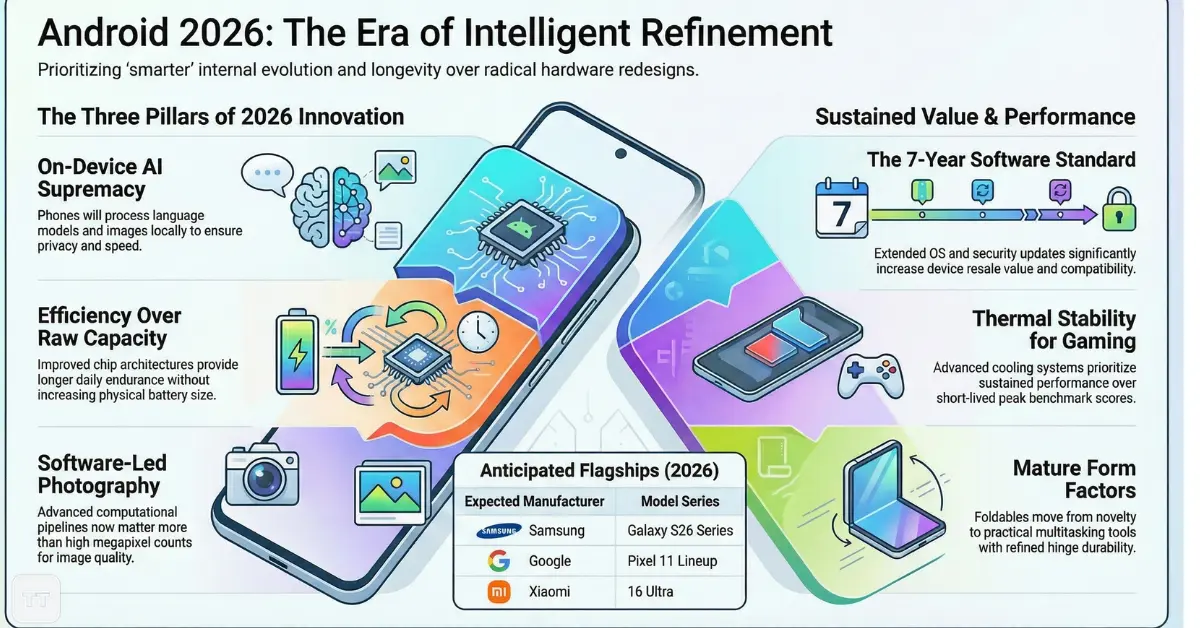
The next wave of Android flagship phones 2026 is expected to lean heavily into on-device artificial intelligence. Instead of sending data to the cloud, phones will increasingly process language models, image enhancements, and predictive features locally. This shift is about privacy, speed, and independence from constant connectivity.
For consumers in the US, UK, AU, and EU markets—where 5G networks are already mature—the question is no longer whether a device supports high-speed connectivity. Nearly all upcoming 5G Android smartphones 2026 will. The real decision centers on intelligence, efficiency, and long-term software support.
Most comparison articles focus on megapixels and refresh rates. What they often miss is this: the 2026 upgrade decision is more about how the phone behaves over time than how it performs on day one.
The Flagship Race: Subtle Design, Major Internal Evolution
Several manufacturers are expected to headline the 2026 smartphone launch calendar with high-end releases. Among the most anticipated:
- Samsung Galaxy S26 series
- Google Pixel 11 lineup
- OnePlus OnePlus 14 Pro
- Xiaomi 16 Ultra
- Sony Xperia 1 VII
While exact specifications will vary, three clear trends are emerging across new Android phones releasing in 2026:
1. AI Processors as the Real Differentiator
Chipsets in 2026 are expected to allocate more silicon space to neural processing units (NPUs). That matters because generative text summaries, AI image expansion, and real-time translation are becoming core operating system features—not optional add-ons.
The practical impact? Faster offline voice processing, smarter photo sorting, and more personalized recommendations that do not rely entirely on cloud servers.
Buyers who use productivity tools, voice assistants, or AI-based editing apps will notice these gains more than casual social media users.
2. Battery Efficiency Over Raw Capacity
Battery sizes may not dramatically increase. Instead, improved fabrication processes and smarter power management systems are likely to deliver longer endurance without adding bulk.
This is an overlooked detail: bigger batteries are no longer the main solution. Efficiency gains from new chip architectures often produce more meaningful real-world improvements.
For frequent travelers or mobile gamers, that subtle efficiency boost could translate into one extra hour of screen time daily—more valuable than incremental charging speed increases.
3. Camera Software Surpassing Hardware Jumps
Hardware sensors are approaching physical limits in slim devices. In 2026, competitive advantage is expected to shift further toward computational photography.
Phones may deliver:
- Improved low-light video stabilization
- AI-assisted subject separation in real-time
- Automatic long-exposure blending without tripod support
The misconception is that more megapixels equal better photos. In reality, smarter image processing pipelines are now the dominant factor in flagship camera performance.
Foldables and Experimental Form Factors: Maturing, Not Just Expanding
Foldables are no longer novelty products. Devices from Samsung and Google have gradually refined hinge durability and crease visibility.
In 2026, the conversation is less about “Can foldables survive daily use?” and more about “Are they practical enough to replace traditional slabs?”
The tradeoff remains clear:
- Foldables offer multitasking and immersive displays.
- They typically compromise on battery capacity and price stability.
For professionals who multitask heavily—email, spreadsheets, messaging—foldables may justify their premium. For buyers prioritizing longevity and resale value, traditional flagships may remain the safer investment.
Gaming Performance: When Power Actually Matters
Mobile gaming continues to influence flagship development. High refresh rate displays (120Hz–144Hz) are standard, but sustained performance is becoming more important than peak benchmark scores.
Thermal management is the hidden battleground. Many Android flagship phones 2026 are expected to integrate larger vapor chambers or advanced graphite cooling layers.
This matters because throttling—when a device slows down due to heat—can undermine even the most powerful chipset. A phone that sustains 90% performance for 30 minutes often delivers a better experience than one that peaks higher but overheats quickly.
For competitive gamers, this is a crucial evaluation point that many spec sheets do not reveal.
Software Longevity: The Real Long-Term Value
One major shift reshaping buying decisions is extended software support.
Recent policies from Samsung and Google indicate multi-year OS and security updates are becoming standard for premium models.
This changes the upgrade equation entirely.
A phone that receives six or seven years of updates:
- Holds resale value longer
- Maintains app compatibility
- Reduces security risk
For buyers considering the best Android phone to wait for 2026, support lifespan may matter more than processor speed.
Connectivity in 2026: 5G Is No Longer the Headline
All major upcoming 5G Android smartphones 2026 will support advanced sub-6 and mmWave variants in key markets. However, connectivity is becoming a baseline feature rather than a selling point.
What may differentiate devices instead:
- Satellite messaging integration
- Smarter Wi-Fi 7 optimization
- Adaptive signal management in congested urban networks
Urban users in London, New York, Sydney, or Berlin may see more benefit from improved network stability than from raw speed improvements.
The Risk of Waiting Too Long
Waiting for new Android phones releasing in 2026 can be wise—but timing matters.
Technology cycles rarely produce dramatic revolutions in a single year. If a 2024 or 2025 flagship already meets performance and camera needs, upgrading purely for incremental AI enhancements may not justify the cost.
The tradeoff is depreciation. Flagships tend to drop in value sharply after new launches. Buyers who wait until late 2026 may secure discounts on early-year releases.
However, early adopters often gain the longest usable lifespan.
This is the overlooked calculation: waiting is not always about getting better technology—it can also mean sacrificing months of productivity and enjoyment.
Mid-Year vs Early-Year Launches: Understanding the Calendar
The 2026 smartphone launch calendar will likely follow familiar patterns:
- Q1: Major global flagships
- Q2–Q3: Performance-focused models
- Q4: Iterative updates and region-specific releases
Understanding this rhythm helps buyers decide whether to purchase immediately after announcement or wait for competitor responses.
Buying at launch often guarantees the longest software runway. Buying six months later often reduces cost without sacrificing relevance.
What Most Buyers Overlook Before Upgrading
Many upgrade decisions focus on visible hardware. Yet several less-discussed factors influence satisfaction:
- Weight distribution and long-term hand comfort
- Thermal behavior during video recording
- Background app management policies
- Repairability and spare parts availability in local markets
A device can score highly in reviews yet feel inconvenient over months of use.
Experienced buyers evaluate daily friction points—not just spec sheet advantages.
Who Should Wait for a 2026 Flagship?
Waiting makes sense for:
- Owners of 2022–2023 devices experiencing battery degradation
- Users interested in AI-heavy productivity features
- Mobile gamers wanting improved thermal stability
- Buyers prioritizing long software support windows
It may not make sense for:
- Those with already high-performing 2025 flagships
- Budget-focused users unlikely to utilize AI or high-end cameras
- Buyers who prioritize price drops over cutting-edge features
The best upcoming Android phones 2026 are likely to refine rather than redefine. For some users, refinement is exactly what justifies the wait.
Broader Industry Implications
The smartphone market in 2026 reflects maturity. Hardware innovation is stabilizing, while software intelligence is accelerating.
Manufacturers are competing on ecosystem integration—smartwatches, tablets, AI assistants—not just individual devices. This means flagship phones increasingly serve as control hubs rather than isolated gadgets.
The decision to upgrade is becoming strategic: it is about entering a more connected, AI-assisted workflow.
Frequently Asked Questions
Are the best upcoming Android phones 2026 worth waiting for?
Yes, for users seeking stronger AI features and longer software support. Those with recent flagships may see incremental rather than transformative gains.
When will new Android phones releasing in 2026 be announced?
Most major flagships are expected in the first quarter, with additional performance models arriving mid-year. Regional releases may extend into Q4.
Will 2026 Android flagship phones improve battery life?
Likely yes, primarily through efficiency gains rather than larger batteries. New chip designs and optimized software are expected to extend real-world usage.
Are upcoming 5G Android smartphones 2026 significantly faster?
Speed increases may be modest. Stability, satellite connectivity, and smarter network management are expected to be more noticeable improvements.
What is the best Android phone to wait for 2026?
The ideal choice depends on priorities. Buyers focused on camera innovation may lean toward computational photography leaders, while productivity users may prefer devices with advanced AI processing and longer support cycles.
Final Perspective: Smarter, Not Just Faster
The 2026 generation of Android devices is less about dramatic hardware reinvention and more about intelligent refinement. AI acceleration, sustained performance, and extended longevity are reshaping what “flagship” truly means.
For buyers planning ahead, the real question is not whether a device is powerful—it is whether it will remain relevant, efficient, and secure for years.
Those who align their purchase timing with their real needs, rather than marketing cycles, are likely to feel the most satisfied when 2026’s new wave of smartphones finally arrives.