Summary
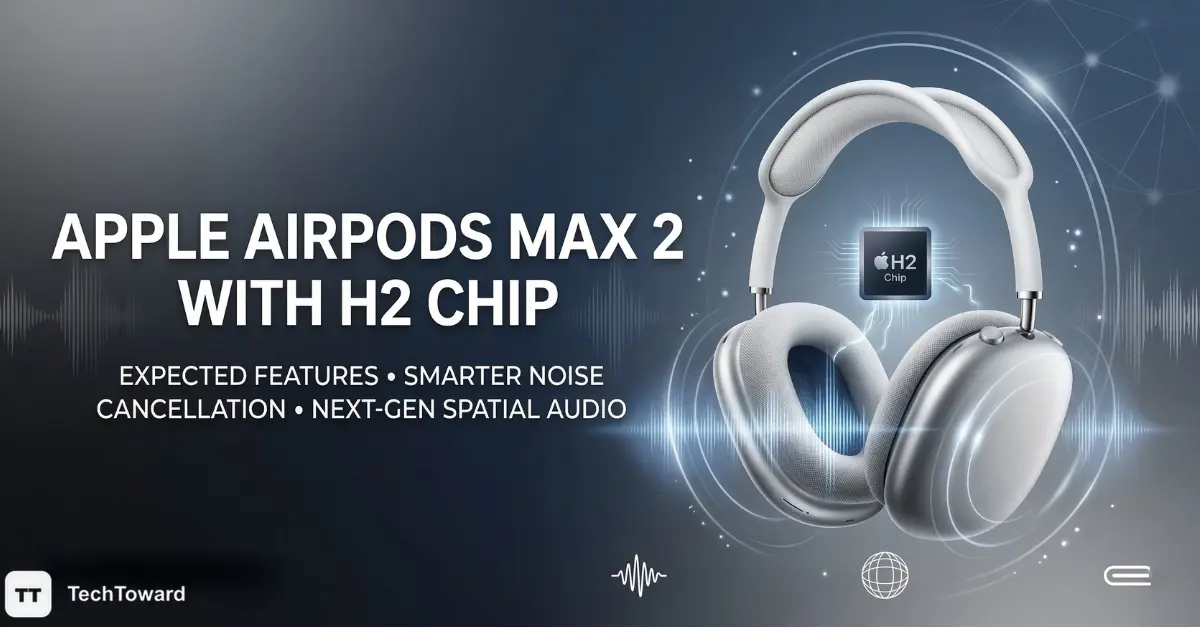
The next version of Apple AirPods Max is widely expected to introduce meaningful improvements in sound processing, battery efficiency, and intelligent noise control through the upgraded H2 chip developed by Apple. Early reports and industry expectations suggest that Apple’s next-generation over-ear headphones will focus less on redesigning the hardware and more on refining audio performance, connectivity, and smart ecosystem integration.
For listeners already invested in Apple’s ecosystem, the upcoming model could represent the most technically capable pair of Apple over-ear headphones yet—especially if Apple adapts the advanced features currently seen in the AirPods Pro (2nd generation).
Why Apple’s Next Over-Ear Headphones Matter Now
Premium headphones have entered a different phase over the past few years. The market is no longer defined only by sound quality or brand reputation. Instead, the most influential models combine three different layers of value:
- advanced audio processing
- deep ecosystem integration
- intelligent adaptive features
Apple’s first AirPods Max demonstrated how powerful that combination could be. While praised for audio clarity and build quality, the original model also revealed some limitations: high weight, limited smart audio features compared with newer AirPods, and a processor that has since been surpassed by newer Apple silicon.
That gap explains why anticipation around the next generation has grown steadily. Rather than reinventing the category, Apple appears poised to refine the product in ways that address the most common criticisms while extending the intelligent audio capabilities that now define Apple’s ecosystem.
The result may not simply be an incremental update. Instead, it could represent the moment when Apple’s over-ear headphones fully inherit the advanced computational audio technology already present in the company’s latest earbuds.
The Role of the H2 Chip in Next-Generation AirPods Max
The most consequential upgrade expected in the new model revolves around Apple’s H2 chip. Although the name suggests a modest generational shift, its real impact lies in how it manages audio data in real time.
In wireless headphones, the processor does far more than power Bluetooth connectivity. It continuously analyzes sound environments, manages microphone arrays, optimizes noise cancellation algorithms, and adjusts audio output based on how the listener moves or interacts with surrounding devices.
The H2 chip significantly expands that capability.
Compared with the previous generation’s processor, the chip is designed to deliver:
- more powerful real-time audio processing
- lower latency for wireless audio streams
- more efficient battery consumption
- enhanced spatial audio calculations
These improvements allow headphones to interpret environmental audio more precisely. That capability matters most in noise cancellation and adaptive sound modes, where subtle algorithmic improvements can make the difference between muffled audio and truly immersive listening.
In practical terms, listeners may notice clearer vocals, more stable spatial positioning in immersive audio, and smoother transitions between noise-control modes.

Expected Audio Improvements Beyond Raw Hardware
Many headphone buyers expect sound quality upgrades to come primarily from better drivers or acoustic design. However, the most meaningful improvements in modern wireless headphones often come from software-driven audio processing.
Apple has increasingly invested in what it calls computational audio—the practice of adjusting sound dynamically using onboard processing power.
With the new chip architecture, several improvements are likely.
More Advanced Active Noise Cancellation
The current AirPods Max already delivers industry-leading noise cancellation. However, improvements in microphone analysis and faster signal processing could allow the new model to react to changing environments more quickly.
For example, sudden noises such as subway doors closing or nearby conversations might be reduced more effectively without introducing the pressure sensation that some users experience with aggressive noise-canceling systems.
Improved Transparency and Adaptive Listening
Transparency mode has become one of the most important features in premium headphones. Rather than isolating the listener, it blends surrounding sound into the listening experience.
The H2 chip could enable a more intelligent version of this mode—one that reduces harsh environmental noise while still allowing voices or announcements to remain clear.
Higher-Quality Spatial Audio Processing
Spatial audio has gradually evolved from a novelty feature into a serious listening tool for movies, games, and immersive music.
More advanced head-tracking algorithms could stabilize the soundstage more effectively, especially when watching content on devices like the Apple Vision Pro or other Apple hardware designed for spatial media experiences.
Design Changes: Evolution Rather Than Reinvention
One of the most debated questions surrounding the new model is whether Apple will redesign the physical hardware.
Most indicators suggest the company may not dramatically change the industrial design.
The original AirPods Max already stand apart in the premium headphone market thanks to their distinctive aluminum ear cups, stainless-steel headband, and breathable mesh canopy. These materials communicate luxury and durability, which is central to Apple’s premium positioning.
However, there are a few areas where refinement would make a noticeable difference.
Potential Weight Reduction
One of the most common criticisms of the current model is its weight. At nearly 385 grams, it is heavier than many competing high-end headphones.
Reducing internal components or adjusting materials could make the new model more comfortable for extended listening sessions.
Updated Connectivity
Another practical improvement may involve replacing the Lightning connector with USB-C. Apple has already transitioned many devices to USB-C due to regulatory changes and ecosystem alignment.
This shift would simplify charging across Apple devices and accessories.
Subtle Comfort Enhancements
Small ergonomic improvements—such as updated ear cushions or pressure distribution—could make long listening sessions more comfortable without altering the recognizable design.
Release Timing: When the New Model May Arrive
Predicting launch timing for Apple hardware is always difficult, but patterns in the company’s product cycle provide useful clues.
The original AirPods Max launched in December 2020. Since then, Apple has focused on updating its earbuds lineup, including major upgrades to the AirPods Pro.
Industry expectations suggest the next generation could appear sometime between late 2025 and 2026, potentially alongside other audio or spatial-computing related announcements.
Several factors influence that timeline:
- Apple’s transition to USB-C across accessories
- the rollout of new Apple silicon audio processors
- increased focus on spatial computing hardware
If the new model is positioned as a companion device for immersive media and spatial audio, Apple may choose to launch it during a broader ecosystem update rather than as a standalone announcement.
How the New Model May Compare to the Original AirPods Max
For existing owners, the most important question is whether upgrading will make a meaningful difference.
At first glance, the two models may look very similar. However, internal upgrades could change the listening experience more than external design changes.
The differences are expected to focus on processing power, intelligent audio features, and connectivity.
Areas Likely to Improve
Several upgrades could significantly separate the new version from the original:
- faster audio processing and lower latency
- smarter adaptive noise control
- improved spatial audio precision
- better battery efficiency
- USB-C connectivity
These upgrades collectively focus on performance rather than aesthetics.
What May Stay the Same
Apple often maintains the physical design of successful products across multiple generations. That approach helps preserve accessory compatibility and brand recognition.
As a result, the overall design, premium materials, and signature digital crown controls may remain largely unchanged.
The Broader Role of Apple’s Over-Ear Headphones in the Ecosystem
Apple rarely builds products in isolation. Each new device tends to reinforce the broader ecosystem of Apple services and hardware.
The next generation of AirPods Max could become more tightly integrated with several Apple platforms.
Seamless Device Switching
Apple’s headphones already switch automatically between devices linked to the same Apple ID. Future updates may make this process faster and more reliable, especially when transitioning between devices like a MacBook, iPhone, and Apple TV.
Spatial Media Experiences
Apple has increasingly invested in spatial audio content across music, movies, and immersive media platforms.
The improved processing capabilities of the H2 chip could enable more realistic sound positioning when watching spatial video or playing games designed for immersive environments.
Smart Context Awareness
Another area where Apple could expand functionality is contextual audio awareness—where headphones automatically adjust settings depending on the environment or user activity.
For example, headphones might reduce noise cancellation when the user begins walking through busy streets or enhance voice clarity during calls.
A Tradeoff Many Buyers Overlook
Premium headphones often promise more features with each generation. However, improvements in processing and intelligence sometimes come with subtle tradeoffs.
One overlooked factor is battery consumption.
Advanced audio processing, spatial calculations, and adaptive modes all require additional computational power. Although newer chips are designed to be more efficient, increased feature complexity can still affect battery life under certain usage patterns.
For example, continuous spatial audio tracking or aggressive adaptive noise cancellation may drain power faster than standard listening modes.
This does not necessarily make the feature undesirable. Instead, it highlights a practical consideration: the most advanced features are often best used selectively rather than continuously.
Understanding that balance helps users get the best real-world performance from premium headphones.
Who Will Benefit Most from the Upgrade
Not every current AirPods Max owner will immediately benefit from upgrading.
The improvements expected in the new generation primarily target users who rely heavily on advanced audio processing or Apple ecosystem integration.
The upgrade may be most worthwhile for:
- frequent travelers who depend on noise cancellation
- Apple ecosystem users with multiple devices
- spatial audio enthusiasts and immersive media consumers
- professionals working with high-quality wireless audio
For listeners who primarily use headphones for casual music playback at home, the original model may remain perfectly capable for years.
This distinction reflects a broader truth about premium headphones: the biggest advantages often appear in demanding listening environments rather than quiet ones.
The Competitive Landscape for Premium Over-Ear Headphones
The premium headphone market has become increasingly competitive, with several brands pushing the boundaries of noise cancellation and wireless audio.
Apple’s strategy differs from most competitors. Rather than competing solely on audio specifications, the company emphasizes ecosystem intelligence and integration.
This approach creates a different type of value proposition.
A pair of headphones that works seamlessly across phones, tablets, laptops, and entertainment devices often becomes more convenient than a technically superior product that operates independently.
If the next AirPods Max continues improving these ecosystem features while strengthening audio performance, it could reinforce Apple’s unique position in the premium headphone market.
Frequently Asked Questions
When is the Apple AirPods Max 2 expected to be released?
Most industry expectations point to a launch between late 2025 and 2026. Apple has not officially confirmed the timeline, but the gap since the original model suggests a new version could arrive soon.
What improvements will the H2 chip bring to AirPods Max?
The H2 chip is expected to deliver better noise cancellation, faster audio processing, improved spatial audio accuracy, and more efficient battery usage.
Will the new AirPods Max look different?
Major design changes are unlikely. Apple typically refines successful designs rather than replacing them entirely, so improvements may focus on weight reduction and connectivity instead.
Is it worth upgrading from the current AirPods Max?
For users who rely heavily on noise cancellation, spatial audio, or Apple ecosystem features, the upgrade may offer noticeable benefits. Casual listeners may find the original model still performs extremely well.
Will the next AirPods Max use USB-C charging?
Many analysts expect the next generation to adopt USB-C, aligning with Apple’s broader shift away from Lightning connectors.
Are the new headphones mainly for Apple users?
While they will work with other devices, their strongest advantages appear when used within Apple’s ecosystem, where automatic switching and spatial audio features operate most effectively.
A Quiet Evolution That Could Redefine Apple’s Headphones
The next generation of AirPods Max may not introduce a dramatic visual transformation. Instead, its significance likely lies in something less visible but more powerful: the evolution of intelligent audio processing.
By combining the H2 chip with refined noise control, spatial audio improvements, and deeper ecosystem integration, Apple appears to be moving toward a future where headphones act less like passive speakers and more like adaptive listening systems.
For users who value immersive sound, seamless connectivity, and smart audio features, that direction may ultimately matter more than any redesign. The most important upgrade may not be what listeners see—but what they hear, and how effortlessly the experience adapts around them.